
Chiropractic Care for Tension Headaches – A Supportive Approach to Lasting Relief in Tampa
Tension headaches can affect your ability to think clearly, focus at work, sleep comfortably, and enjoy your daily routine. Many people describe them as a tight band around the head or a deep ache that settles in behind the eyes or across the temples. Others feel pressure that builds slowly and becomes stronger as the day goes on. These patterns are frustrating, and they often return again and again if the underlying cause is not addressed. At Peak Performance in Tampa, our focus is to help you understand why tension headaches occur and how chiropractic care can support steady, lasting improvement.
Chiropractic care is a gentle, natural approach that works with your spine, muscles, and nervous system. When the neck and upper back are under strain, the surrounding nerves and soft tissues can become irritated. This irritation often leads to the familiar discomfort that tension headaches bring. By restoring healthy movement and reducing areas of stress within the spine, we aim to help your body function more comfortably. Many patients begin to feel relief as their posture improves, their neck becomes more mobile, and the tightness around their shoulders begins to release.
Whether your headaches stem from long hours at a desk, stress, old injuries, or daily activities that place strain on your neck, chiropractic care may be an important step toward recovery. With the right support, you can move toward days with less discomfort and a better sense of balance throughout your body.
Understanding Tension Headaches and Why They Develop
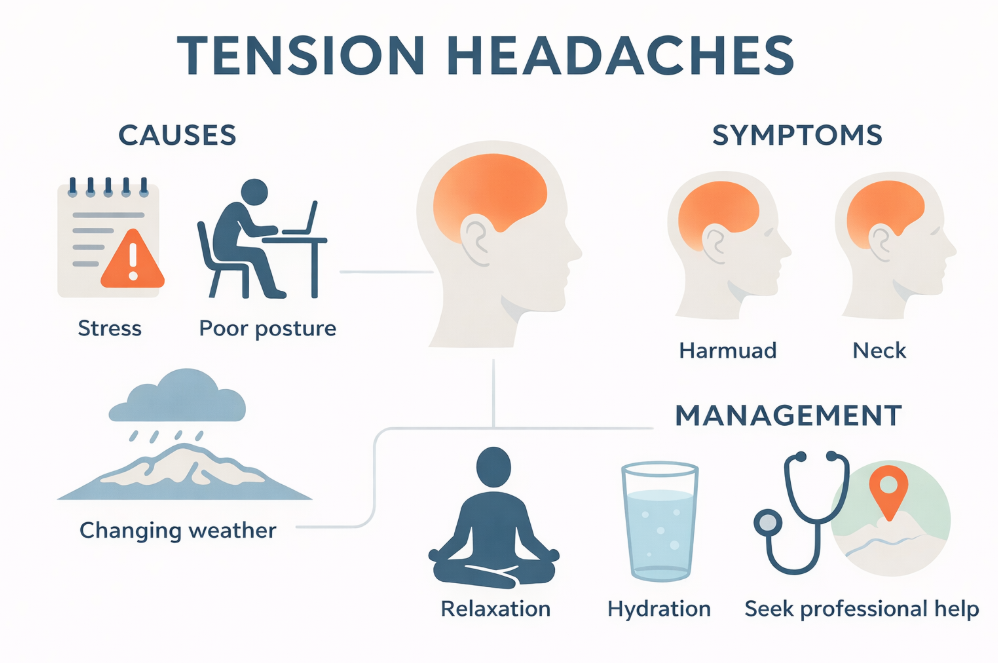
Tension headaches are among the most common forms of head pain. They occur when muscles in the neck, shoulders, and upper back tighten or when the joints in the upper spine lose their normal movement. This tension can irritate the nerves that travel to the head and face, creating the dull, aching pain many people recognize.
Common causes include:
- Poor posture while working or studying
- Stress that causes the shoulders to rise and tighten
- Long hours spent looking down at phones or screens
- Old injuries that never healed properly
- Restricted movement in the neck
- Sleep positions that strain the spine
When these factors add up, the muscles and joints in the upper spine can become overworked. This often leads to stiffness and pain that radiate upward. Many patients also notice tension behind the eyes or across the forehead. These symptoms are not random. They reflect how sensitive the nerves in this region can be when they are under strain.
Tension headaches develop gradually for many people. They may begin with mild discomfort that grows stronger throughout the day. They often appear during stressful periods or after long hours in front of a computer. Over time, they may become frequent enough to interrupt concentration, productivity, and even sleep. Chiropractic care focuses on identifying the source of tension and how to alleviate the strain placed on these sensitive areas.
How the Neck and Spine Influence Tension Headaches
Your spine plays a crucial role in how your muscles and nerves respond to daily stress. When the joints in your neck move well and stay aligned, the surrounding muscles can relax and function more naturally. The nerves that travel through the upper spine can send and receive signals without unnecessary irritation. This balance supports comfort, movement, and clear communication throughout the body.
Tension headaches often occur when the upper spine becomes restricted. These restrictions may be caused by repetitive movements, extended periods of sitting, or postural habits that place the neck in a forward-tilted position. As the joints lose mobility, the muscles attempt to compensate by tightening. This tightness creates pressure on the surrounding nerves and soft tissues. Over time, this chain of tension can lead to headaches.
Another area that influences tension headaches is the connection between the neck and shoulders. When the shoulders rise toward the ears or rotate forward, the muscles along the upper back must work harder than they should. This often leads to a sense of tightness that creeps upward toward the base of the skull. Many people with tension headaches also report discomfort in the upper back or between the shoulder blades. These patterns reflect how closely the spine and nervous system are linked.
Chiropractic care for tension headaches addresses each of these components. Through careful evaluation and personalized treatment, we work to restore natural motion and reduce the areas of stress that contribute to recurring headache symptoms.
The Chiropractic Evaluation: Understanding Your Headache Patterns
When you visit Peak Performance for tension headache care, the first step is a detailed evaluation. This process allows us to understand the history of your symptoms and the physical patterns that contribute to them. Many patients feel relieved during this conversation because it gives them space to describe what they have been experiencing without having to minimize the impact these headaches have had on their lives.
During the evaluation, we will look at:
- Your posture and how it affects your neck
- The mobility of the joints in your spine
- The condition of the muscles in your neck and upper back
- The way you move through common tasks
- Stress patterns that influence tension
We may also use neurological testing to assess how your nervous system responds to motion and pressure. This helps us determine whether certain nerves are being irritated or whether muscle tension is affecting the way the spine functions.
Imaging may be recommended if we need more detailed information about the structure of your spine. While not always necessary, these images can clarify how the joints and soft tissues are contributing to your symptoms.
The purpose of the evaluation is to build a clear understanding of the cause of your tension headaches. Once we know what is driving your discomfort, we can create a care plan that supports your long-term recovery.
Chiropractic Treatment for Tension Headaches
Chiropractic care offers a gentle, effective approach for reducing headache frequency and intensity. Our focus is to improve spinal alignment, decrease muscle tension, and support healthy communication within the nervous system. Each treatment plan is personalized based on your evaluation findings.
Spinal adjustments
Precise spinal adjustments help restore movement in restricted joints. When the neck moves the way it should, the muscles supporting it can relax. Adjustments also help reduce pressure on nerves that contribute to headache symptoms. Patients often report improved mobility and a sense of relief after treatment.
Soft tissue therapy
Muscles in the neck and upper back can hold tension for long periods. Soft tissue therapy reduces this tension by improving circulation and relaxing tight areas. This therapy supports adjustments by allowing the spine to move more freely.
Corrective exercises
Strengthening and stretching exercises help address movement patterns that lead to recurring tension. These exercises are simple, practical, and designed to support your daily routine. Over time, they help stabilize the spine and reduce the likelihood of headaches returning.
Posture and ergonomic support
Daily habits influence tension headaches. Adjusting your workspace, improving your sitting posture, and taking breaks to stretch can support your progress. We provide guidance tailored to your lifestyle so you can maintain comfort outside the clinic.
Stress and lifestyle guidance
Stress can cause tension to build in the neck and shoulders. Simple changes such as breathing exercises, hydration, and improved sleep habits can make a meaningful difference. These small adjustments often work well when combined with chiropractic care.
TRT at Peak Performance
Peak Performance offers The Torque Release Technique (TRT), which is a specific chiropractic method designed to correct spinal misalignments, also known as subluxations, through gentle and precise adjustments. TRT is known for being a low-force technique, making it comfortable for a wide range of patients, including those who might be sensitive to more traditional chiropractic adjustments.
Many patients begin to experience improvement as they progress through their treatment plan. Some notice greater neck mobility, while others feel that the frequency of their headaches starts to decrease. The steady progress reflects how chiropractic care supports the body’s natural capacity for healing.
How Chiropractic Care Supports Long-Term Improvement
Tension headaches often develop gradually, and lasting improvement requires addressing the patterns that caused them. Chiropractic care focuses on long-term support by improving spinal alignment and teaching the body to maintain healthier movement.
As treatment progresses, many patients notice:
- More comfortable movement in the neck
- Less tension in the shoulders
- Reduced frequency of headaches
- Shorter duration of symptoms
- Better concentration at work
- Improved posture throughout the day
These changes reflect how strongly the spine and nervous system influence head and neck comfort. When the spine moves well and the nervous system communicates clearly, the body is better able to adapt to stress and maintain comfort.
The goal of chiropractic care is not a quick fix. Instead, it is a steady process that supports your overall wellness. With consistent treatment, many Tampa patients regain confidence in their ability to manage daily activities without constant worry about headache flare-ups.
Taking the Next Step Toward Relief from Tension Headaches
If you are ready to address your tension headaches with a supportive and natural approach, chiropractic care may be the right choice. Relief begins with understanding the cause of your symptoms and receiving care that helps your body function the way it was designed to move. Many patients who start chiropractic care feel hopeful once they begin to understand the patterns that have contributed to their discomfort. With steady treatment and practical guidance, you can move toward clearer, more comfortable days.
At Peak Performance, our team is ready to support your progress. We invite you to schedule an appointment so we can learn more about your symptoms and begin building a plan that reflects your goals and needs.