Back Pain After a Car Accident Treatment
If you’re dealing with back pain after car accident, treatment is important. The pain can disrupt work, sleep, and daily tasks. At Peak Performance Health, we aim to help patients recover effectively with tailored, evidence-informed care and support across the recovery journey.
Below you’ll find explanations of why back pain follows a collision, typical injury patterns, the importance of prompt evaluation, therapy options we offer, and how to move forward confidently with care.
Common Causes of Back Pain After a Car Accident
Back pain following a car accident can be unsettling and, at times, overwhelming, especially as symptoms may not always be immediately evident. At Peak Performance Health, we’ve helped many patients navigate these confusing days after a collision. There are several injury mechanisms unique to auto accidents that can cause lasting discomfort.
Understanding why back pain develops after a crash is a crucial first step in securing the right care and relief. From the specific injuries people encounter to the symptoms they experience, let’s clarify the most common causes so you know what signs to look for and feel empowered in seeking back pain treatment.
How Car Crashes Trigger Back Pain
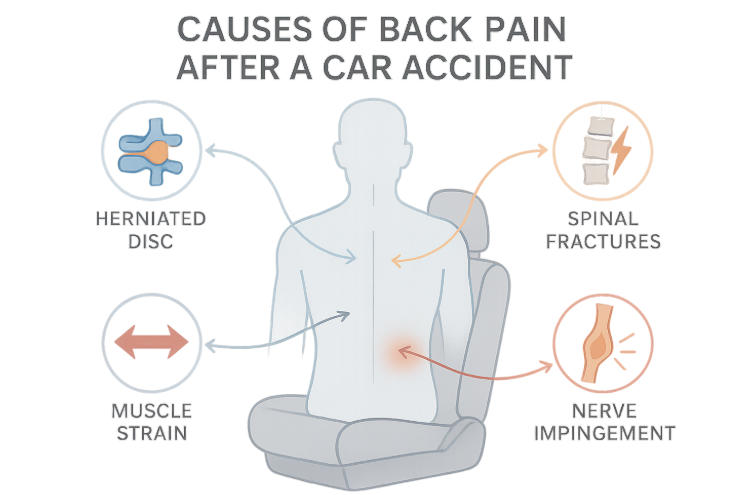
A collision exerts sudden forces that can damage structures in your spine, even if symptoms don’t appear immediately. Over time, underlying injury or inflammation may become more noticeable.
Possible injury mechanisms include:
- Soft tissue strain of muscles and ligaments, causing soreness, swelling, or stiffness.
- Herniated or bulging discs that press on nearby nerves, producing sharp or radiating pain.
- Facet joint irritation leading to deep, aching pain that intensifies with twisting or bending.
- Ligament injuries and micro-instability (sometimes referred to by terms like AOMSI) may not show up right away but cause recurring discomfort later.
- Whiplash extension into the back—injuries often assumed to affect the neck can also impact midback or lower back regions.
Because Peak Performance Health emphasizes screening and diagnostics, this approach supports uncovering hidden or delayed spinal and ligament injuries.
Injury Types and Red Flag Symptoms
Understanding different injury types helps guide effective treatment. Some common patterns include:
- Soft tissue issues: localized soreness, tension, muscle spasms, reduced range of motion.
- Disc-related injury: radiating pain down legs or into arms, numbness, tingling, weakness in limbs.
- Spinal joint problems: stabbing or deep pain worsened by movement or posture changes.
- Instability or ligament damage: delayed-onset pain, fluctuating symptoms, sometimes dizziness or headaches if adjacent areas are involved.
If you notice worsening symptoms, neurological signs (e.g., loss of bladder or bowel function), or abrupt changes, seek medical care immediately.
Importance of Timely Evaluation & Documentation
Peak Performance Health stresses early screening, diagnostics, and case management in their automobile-injury work.
Here’s why acting early matters:
- Hidden injuries may worsen if untreated.
- Medical documentation supports insurance and legal claims, especially in auto injury cases that they handle.
- Baseline assessments allow tracking of progress and guide adjustments in therapy.
- The model includes medical examiners, case coordination, and supplying records to attorneys.
Peak Performance Health provides medical records, third-party examinations, and case management services to support claims.
Treatment Strategies at Peak Performance Health
Because every injury is unique, the care plan must be adaptive and patient-centered. At Peak Performance Health, we pair chiropractic care with diagnostics, therapeutic modalities, and coordination for legal cases.
Here are the relevant approaches for back pain after a crash:
- Chiropractic adjustments: Gentle, instrument-based, or computerized methods to restore alignment and motion with consistency and comfort.
- Soft-tissue therapy & massage: To reduce muscle tension, spasms, and support better alignment. At Peak Performance Health, we highlight massage therapy as part of our integrated protocols.
- Spinal decompression/traction: Used to relieve disc pressure or nerve impingement. Some offered services are “nonsurgical spinal decompression”, among others.
- Diagnostic & imaging referrals: When more detail is needed (e.g., MRI, X-ray) to identify disc, nerve, or structural injury.
- Case coordination & documentation support: Because Peak Performance Health emphasizes legal and insurance support, treatment is often integrated with case management, third-party examiner review, and report furnishing.
- Rehabilitation & movement therapy: Once pain stabilizes, guided exercises and movement correction improve strength and prevent recurrence.
Our care for our patients is structured to support recovery, legal defense, and long-term wellness.
Patient Support for Treatments like Physical Therapy
Back pain after a car accident doesn’t have to become permanent. With the right evaluation, diagnostics, and treatment, recovery is possible even in complex cases.
If you’ve been injured in a crash:
- Reach out to schedule a screening or consultation as soon as possible.
- Make sure your provider coordinates with any legal representation you may have. Peak Performance offers medical–legal support.
- Stay active within pain limits and follow movement guidelines.
- Follow the structured care plan and communicate changes in symptoms.
Moving Forward with Confidence after a Car Accident
Back pain after a car accident doesn’t have to dictate your life. With expert evaluation, targeted therapies, and ongoing support, recovery is possible. At Peak Performance Health, our team is committed to helping patients regain comfort, mobility, and peace of mind.
Call our Tampa clinic today to schedule a same-day or next-day appointment. Don’t wait for symptoms to worsen, take the first step toward lasting relief and a safer recovery plan. Se habla español.