
Symptoms and Signs of Mild TBI After Car Crash
Car accidents can leave more than just visible injuries. One of the most overlooked outcomes is a mild traumatic brain injury (TBI). Often referred to as a concussion , this type of injury can happen even in minor collisions and may not appear right away. Recognizing the signs of mild TBI after car crash and getting prompt medical care can make recovery smoother and protect long-term health.
At Peak Performance Health, we see many patients who did not realize their accident left them with hidden injuries. This guide explains what to look for, when to seek help, and how early assessments support recovery.
A Mild Traumatic Brain Injury After a Car Accident
Mild traumatic brain injury (mild TBI), often described as a concussion, can happen to anyone involved in a car accident, even if the incident seemed minor at the time. These injuries can be subtle but have a significant impact on daily life, making it important to recognize them early.
From the sudden stop’s force to the shaking of your head and neck, multiple factors during a crash contribute to the onset of symptoms. At Peak Performance Health, we’re dedicated to helping you spot the early signs of mild TBI after a car crash, so you can get the right care and guidance for recovery.
Understanding Mild TBI After a Car Accident
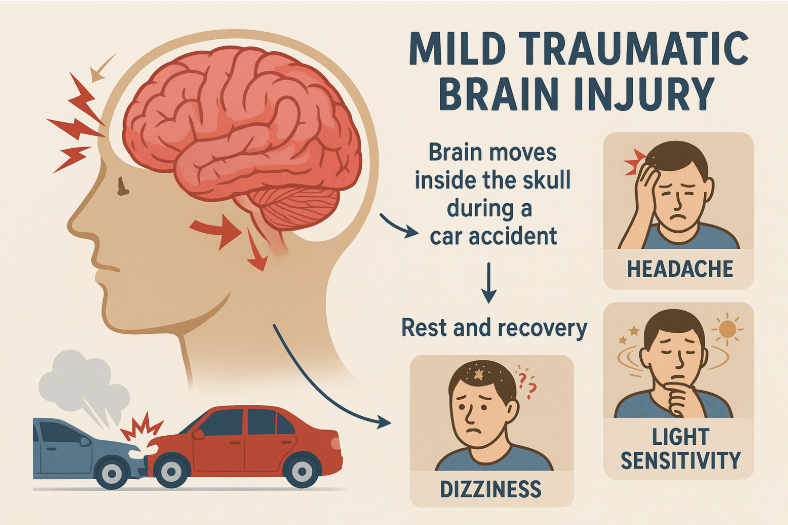
A mild TBI happens when sudden movement during a crash causes the brain to shift inside the skull. This force disrupts normal brain function, even if you never hit your head. Many people walk away from accidents assuming they are fine, only to notice symptoms hours or days later.
Several factors increase the likelihood of a concussion after a collision:
- Type of accident – Rear-end, side-impact, and high-speed crashes carry a higher risk.
- Protective measures – Not wearing a seatbelt or poorly adjusted head restraints can worsen the injury.
- Medical history – Previous concussions or neurological conditions make the brain more sensitive to trauma.
Because these injuries often appear in a subtle manner, many adults ignore them and push through daily routines. That choice can prolong recovery and lead to complications.
Early Warning Signs of Brain Injuries That Shouldn’t Be Ignored
The hours and days after a car crash are critical for spotting signs of mild TBI. Stress, shock, and adrenaline may mask symptoms at first, which is why self-monitoring is important.
Physical symptoms may include:
- Persistent headaches or migraines
- Dizziness or loss of balance
- Blurred vision or sensitivity to light
- Nausea or vomiting
- Unusual fatigue or sleep disturbances
Cognitive symptoms can affect work and daily tasks:
- Difficulty focusing or processing information
- Forgetfulness or short-term memory gaps
- Slowed reaction times
- Trouble following conversations
Emotional symptoms are just as important:
- Irritability or mood swings
- Anxiety or depression
- Feeling overwhelmed by normal stress
- A sense of not feeling “like yourself”
If any of these signs appear, even if mild, it’s time to seek professional care. Early evaluation reduces the chance of prolonged symptoms and provides documentation needed for Florida PIP claims or work accommodations.
Why Symptoms Often Develop Slowly
One of the most concerning aspects of mild TBI is delayed onset. Unlike cuts or broken bones, brain injuries may not show immediate symptoms. You might feel fine right after a crash, only to develop headaches, memory problems, or sensitivity to noise days later.
This delay often leads people to dismiss the connection between the accident and how they feel. But ignoring subtle changes can cause lasting problems at work, in your relationships, and during daily responsibilities. Knowing that symptoms can worsen over time highlights the importance of early screening, even if you think you are fine.
How Same-Day Chiropractic Assessments Support Recovery
In the moments and days right after a car accident, receiving a same-day chiropractic assessment can make a real difference in your recovery, especially if there’s any suspicion of a mild traumatic brain injury. When you walk into Peak Performance Health with symptoms like headaches, dizziness, confusion, or neck and back pain, our first priority is to thoroughly evaluate your condition before symptoms have a chance to worsen or become chronic. Examining you right away allows us to screen for subtle signs of concussion and related injuries, often before they escalate or become more difficult to treat.
Seeking prompt evaluation after an accident can make a major difference in recovery. At Peak Performance Health, we provide same-day chiropractic assessments designed to identify and address mild TBI symptoms early.
During your visit, we:
- Screen for neurological changes that may point to a concussion.
- Check for musculoskeletal injuries that could mimic or worsen symptoms.
- Provide immediate, non-invasive therapies to reduce pain and improve function.
- Offer documentation for insurance, workplace needs, and legal purposes.
For busy professionals, parents, and students, early care means fewer disruptions to work or school. We also create return-to-work plans to help patients resume their responsibilities safely. Same-day assessments not only guide treatment but also give peace of mind that nothing has been overlooked.
Taking Action for a Safer Recovery
Recognizing the signs of mild TBI after a car crash can protect your health and improve your recovery timeline. Whether you notice physical discomfort, memory issues, or emotional changes, don’t wait to get help.
At Peak Performance Health, our Tampa team is ready to provide compassionate, same-day care. We also support Spanish-speaking families to ensure clear communication at every step. If you suspect symptoms after an accident, schedule an appointment today. Your path back to clarity, comfort, and normal activity starts with a single call.